Showing posts with label Business. Show all posts

Friday, March 23, 2012

Business Gets Social with IBM SmartCloud

It's no surprise to me--and it's probably not a surprise to you either--that the cloud has enveloped another business function: Collaboration is the latest technology to be rolled into the cloud, joining such veterans as software as a service, platform as a service and infrastructure as a service.

Collaboration, in technology terms, is a catch-all word that encompasses messages (emails, texts and instant messages); virtual meetings; social media, such as Facebook, LinkedIn and Twitter; knowledge and document management; file sharing; mobility; project management; and virtual communities.

And it's not just for employees, whether in the office or in remote locations around the world. This technology also brings customers, suppliers and business partners into the fold. All of a company's stakeholders can communicate, meet and share information using one collaboration platform.

It's an intriguing idea that has the potential to improve productivity, unite employees and even increase revenue. IT vendors are well-aware of these benefits and are beginning to introduce cloud collaboration tools. And businesses are starting to pay attention.

IBM calls its new collaboration platform the SmartCloud for Social Business. It includes email, instant messaging, calendars, Web meetings, application and file sharing, communities and personal dashboards. At a March event in New York City, IBM detailed these capabilities and mentioned customers that are adopting collaboration tools, including the state of Vermont and Panasonic.

The guest speaker at the event was Henry Macchiarola, the global IT director of Colgate-Palmolive. He told the audience of business executives that "collaboration and messaging are global business-critical applications" for his company, which has about 39,000 employees.

Global teamwork is one of Colgate-Palmolive's core values, Macchiarola said, adding that the company's is geographically dispersed and has a large virtual workforce. "The number of our remote workers and generation Y employees is increasing significantly," he said. For these reasons, collaboration tools are essential. The technology also helps the company get the most talented workers, regardless of their location.

Another technology that's critical to Colgate-Palmolive's business is the cloud. "The number of collaboration tools is growing, and we need to collaborate both in and out of the company," Macchiarola said, referring to working with other companies such as business partners. "Our on-premise environment works well, but we see [the cloud] as an opportunity to collaborate outside the company and get to market faster.

"Our focus is on continuous improvement, and innovation happens in the cloud."

Posted by Eileen Feretic / Bottom Line

Thursday, March 22, 2012

Adobe Simplifies Social Marketing With New Adobe Social Offering

At its Adobe Digital Marketing Summit, Adobe Systems introduced Adobe Social, a new product that simplifies social marketing and adds analytics to the mix.

SALT LAKE CITY — Adobe Systems (Nasdaq:ADBE) has today introduced Adobe Social, a new product to simplify social marketing for digital media professionals.

Adobe announced the product at its Adobe Digital Marketing Summit 2012 here. The offering is part of the Adobe Digital Marketing Suite. Adobe Social combines social publishing and engagement with monitoring, social ad buying and analytics that can attribute social activity to business results.

Adobe is giving those with social marketing responsibilities—digital marketers, community managers, customer service, public relations, ad buyers, analysts and others—a single platform to align and collaborate around the management, measurement and optimization of their social media strategies, and does so in the context of all other digital marketing efforts, the company said.

“The sheer scale of word-of-mouth that can be accomplished on social media can become a powerful boost or tragic descent for any company and is best managed if a company’s social marketers are in lock-step,” Brad Rencher, senior vice president and general manager, Digital Marketing Business, Adobe, said in a statement. “Adobe Social brings to social marketing the control and accountability expected across other digital channels. The ultimate aim is to help social media as a marketing channel mature and prove its worth alongside other digital marketing investments.”

Adobe Social builds on the social media management technology Adobe acquired earlier this year as part of the Context Optional/Efficient Frontier acquisition, as well as the social media monitoring and analytics of Adobe Social Analytics. Adobe Social will expand this year with additional social marketing features as well as integrations with other products within the Adobe Digital Marketing Suite.

With Adobe Social, digital marketers can now accomplish the following with a single product:

• streamline and centralize publishing across social platforms;

• automate targeting and personalization of content and experiences in social applications and across social platforms;

• seamlessly integrate Sponsored Story ad creation within the publishing workflow to maximize the reach of important content and campaigns;

• monitor and moderate conversations both within your communities and anywhere it happens on the social Web;

• import analytics data from Facebook, Twitter, Pinterest, Google+, blogs and other social platforms into Adobe Social and tie social activities to business results;

• identify and engage key influencers to drive positive conversations about your brand;

• monitor the sentiment of conversations and receive alerts on relevant trends;

• easily create and deploy social apps, such as contests or forms, without the need for design or development resources; and

• directly measure across the customer journey how social media interactions and engagement drive purchase behavior.

The capabilities of Adobe Social are complemented by technology acquired from Efficient Frontier, which brings social ad buying and social campaign optimization to the Adobe Digital Marketing Suite, Adobe officials said. This technology provides multichannel campaign management and optimization across the leading digital ad marketplaces. In addition to search, display and Facebook support, the former Efficient Frontier technology now supports campaign management and optimization capabilities for LinkedIn Ads.

"In our industry, fans have tremendous passion about the artists they love to see and the shows they attend,” said Gretchen Fox, vice president of Social Media at LiveNation, in a statement. “Our goal with social media is to engage with our fans and give them ways to connect with each other around their concert experiences. The ability of Adobe Social to reveal deeper connections across the social activities of our fans and manage key business results and hundreds of Facebook pages and Twitter profiles across a single platform is incredibly valuable."

“With social marketing, companies are building awareness and relationships, driving engagement and transactions and creating loyalty,” Mary Wardley, IDC program vice president for CRM Applications, said in a statement. “Unfortunately, this is often a siloed and disjointed effort, in no small part because companies are using point products for different pieces of social marketing. The ability to manage all aspects of social marketing in a manner that allows for the ability to measure performance alongside other digital marketing initiatives should be a goal for every digital marketer serious about social.”

Adobe Social, a new offering within the Adobe Digital Marketing Suite, will be available in the latter half of 2012.

By: Darryl K. Taft / Business Week

Thursday, March 15, 2012

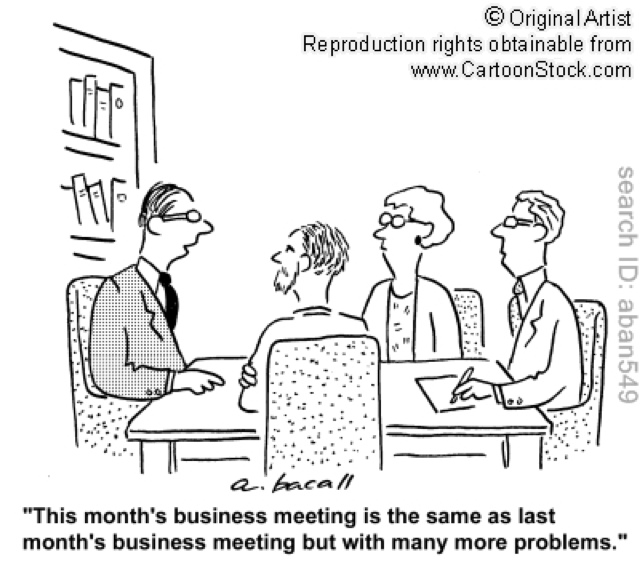
How to Turn Awful Meetings Into Awesome Meetings

We're spending too much of our time at meetings, and many of us feel like that's not time well spent, recent studies show. Workers today spend an average of 5.6 hours a week attending meetings, and a whopping 71 percent of them feel like it's not a productive use of their time, a Microsoft report indicates.

To address the root causes of ineffective meetings, GiveMore.com recently surveyed 1,600 people with a simple question: "What frustrates you most about meetings at work?" You may recognize some of their answers, but fear not.

We also propose suggestions on how to better organize your meetings to make them productive experiences that you and your fellow colleagues may even, dare we say it, look forward to. It starts at the top.

Corrective action "can be handled so easily by the leader," says Sam Parker, co-founder of GiveMore.com. "Almost all [causes of frustration] fall into that category. Respect your attendees by preparing well, communicating well and valuing everyone's time.

You should have one objective: Make your attendees better as a result of being there." GiveMore.com is a business specializing in meeting planning and execution.

Problem: Too much rambling and repetition. Solution: State what you have to say concisely and clearly, then move on.

Problem: Meetings don't start on time. Solution: Enforce start time with no exceptions, and don't backtrack for stragglers.

Problem: Discussion never stays on track. Solution: Come up with focused agenda, distribute it and stick to it.

Problem: There are no 'action points'. Solution: Make sure duties are assigned to attendees capable of doing them.

Problem: There is no point. Solution: Align purpose to well-established organizational objectives.

Problem: It's too long. Solution: Keep the agenda streamlined, stick to it, and respect ending times.

Problem: It's too boring. Solution: Require presenters to arrive prepared, with material that isn't redundant, and to actively engage participants.

Problem: 'We Have Meetings Just to Have Meetings!' Solution: Don't. Give e-updates on standard business.

By Dennis McCafferty / Baseline

Monday, March 12, 2012

Social Media Helps Build Strong Brands

New technologies on the Web are changing how forward-thinking companies are approaching branding. Over the last few years, social media services such as Facebook, Twitter, Google+ and others have provided direct access to reach customers.

Social media services connect companies to consumers. Facebook allows companies to communicate with close to a billion people (half of whom log on during any given day), and that number is rapidly growing.

Furthermore, these potential customers can be found on Facebook pages published in 70 different languages, allowing global penetration of brand awareness. Connecting to these individuals allows companies to gather consumer information that ranges from the age of the individual and his or her current location to favorite hobbies and social networks.

Twitter has more than 200 million registered users, and Google+ has more than 90 million members and is still defining its role in social media. Recognizing the impact and importance of social media and branding, Google+ released its brand pages in November 2011. All these social media outlets provide opportunities for companies to strengthen their brands.

Traditionally, the term “brand” referred to the way in which a company or organization differentiates itself from its competition. In the era of the Internet and social media, branding occurs in new and interesting ways—even personal branding.

How can a person, an organization or a company use the new tools offered by the Internet to create or strengthen a brand? Consider the following six steps for a successful social media setup:

1. Identify interested customers to encourage brand loyalty.

Understanding support on the Internet requires knowledge of a new vocabulary, specifically one that clarifies the ways in which a social media site visitor can indicate favorability. A few terms to know:

Likes: A “Like” on Facebook means an individual supports a particular topic. While the value and profit-making potential of Likes remain undefined, many digital communications experts believe that the more people positively engage with the brand, the more significant the brand’s products and/or services will become. In the end, this often translates into a sales increase.

+1: Google+’s version of the Like is a +1. Google+ defines +1 as “your stamp of approval.”

Retweet: On Twitter, a follower will retweet to indicate that a particular tweet or piece of information is worthy of attention. Companies follow retweets to identify product and service strengths and weaknesses, as well as to gain knowledge about their customers.

Fan pages: Companies use fan pages to promote themselves. While there is no direct translation of fans to finances, fan pages do provide channels for companies to promote content, advertisements and promotions to interested consumers quickly and inexpensively. Presumably, people who have indicated their support on a fan page will be more likely to use a promotion or coupon from the company they support.

2. Build a community to communicate with customers and improve service.

Social media services inform customers of news and information regarding company initiatives and products. In Facebook’s words, “Build a community around your company.” From receiving instant feedback on proposed changes and products to conducting market research on consumer preferences, social media provide a channel for timely responses, which conveys integrity and loyalty.

Use social media for customer service to help get your customers’ questions answered quickly and automatically. For example, when a person tweets about a concern, a company can have prepared answers sent out automatically by a computer program called an intelligent agent, which recognizes word phrases that indicate a particular concern. This can create a good customer relationship.

3. Create viral videos and engage with consumers to promote new products and brands.

One of the best ways to promote a brand is to create a promotional video. Burger King was one of the first companies to use viral videos in 2005 to promote its TenderCrisp chicken sandwich. The company created a video of a man directing a large chicken to act out his orders and demands.

The message was that this sandwich would provide chicken according to a customer’s specific liking. The viral video inspired a Website at which consumers could control a chicken’s movement. The site became so popular that Burger King improved it, enabling the chicken to respond to more than 300 commands.

In another case, Ford recently discovered that its orange puppet “Doug” and his viral videos helped market the company’s Focus car. Ford didn’t skimp on the production of its Doug videos and hired writers from The Simpsons and The Office to produce the clips. Once the videos went viral, the amount of attention the clips received negated the production costs, and the overall campaign was less expensive than TV advertisements.

4. Distribute promotions through social media channels.

Web discounts and promotions, many of which are accessible through mobile phones, can be used to lead organizations’ promotional efforts. Social media support distribution of deals and coupons. Furthermore, location services enable social media Websites like Foursquare to target promotions to people based on their proximity to restaurants, bars, stores and services.

5. Use social media for issues management.

Companies need to monitor social media and the blogosphere. This takes time and money — one reason it is so important to have the C-suite understand and support social media efforts. Ideally, a company should have a director of social media with strong staff support. Make certain that information is distributed to influential, reliable opinion leaders who will accurately communicate pertinent information about your products and services.

Use Twitter, Facebook and Google+ to quell false rumors, take responsibility for mistakes and indicate how the company will solve issues. Be proactive by answering questions and addressing issues that could lead to negative perceptions. Social media opens channels for honest communication between customers and companies. What customers say must be followed, tabulated and analyzed.

Bank of America recently grappled with an overwhelmingly negative reaction to its proposal to charge customers a $5-per-month debit card fee. After 750,000 people signed an online petition, the bank was forced to listen and removed the fee. Responding to earlier frustrations and engaging with the online community might have prevented this public relations fiasco.

6. Create customized appeals.

Develop customized appeals to people based on information gathered from commentary and feedback via social media. On Facebook, for example, a soft-drinks company can target hikers with ads showing trekkers enjoying beverages at the end of a long trip. To sports fans, run ads that show people playing or enjoying watching sports, with branded drinks beside them. Or exhibit ads to hobbyists that picture them enjoying a soda around a table of scrapbookers, quilters, coin collectors or other hobby groups.

Such appeals are easy and fairly inexpensive to create, and you can ensure they are seen by the people to whom they will appeal the most. In this world of instant analytics, organizations creating advertisements on social media get immediate feedback on how well ads are received by targeted audiences.

Social media usage is growing dramatically and has drastically changed branding. Companies must learn to follow and understand digital technology trends to meet the needs of their consumers and tailor their branding strategies effectively. By following these six steps, companies can rest assured that their brand and reputation will stay in a positive light in the public eye.

By Betsy Sigman / Baseline.

Betsy Sigman, distinguished teaching professor at Georgetown University’s McDonough School of Business, is an expert in social media and information systems and in how companies use technology. She has worked with the Institute for Research in the Social Sciences, the Social Science Data Center and the U.S. Bureau of the Census, and is a member of Women in Technology International.

Thursday, March 8, 2012

Social Network Generates Market Research for Mercedes-Benz

With Stars Insight, its social community Website, Mercedes-Benz enhances customer loyalty and gains valuable market research. This enables the car maker to react quickly to the needs of its customers.

By Christian Bauer, head of Mercedes-Benz Communication Insights in Germany.

------

In mid-2009, my company, $130 billion luxury car maker Daimler AG, asked me, as head of Mercedes-Benz Communication Insights in Germany, to examine how new media could be used in market research. Upon investigation it was clear to me that Web 2.0 was a thriving market that offered the right tools and services for our project: creating the first online market research community in the German auto industry.

With this information, my team and I went to work to build out and test the capabilities of the so-called "participatory Web" for market research. With this project, we entered uncharted territory, but knew from our U.S. colleagues' pilot "Gen Benz" community Website that we needed the help of a partner to provide us with an online platform that could handle moderation, analysis, reporting, recruitment of community members and professional support. We sought a development partner that had this community experience to ensure smooth operation and quality standards in market research, and we identified TNS (Taylor Nelson Sofres), a global market research and consulting company in London.

Our social community Website originally ran on a Pringo platform. But after a year of repeated problems with stability and scalability, TNS and our team decided to migrate to Acquia Commons, an open-source, enterprise-scale social business software platform from Acquia, a company that enables enterprises to use the open-source Web content management/social publishing system Drupal. The collaborative environment includes blogs, wikis, calendars and other capabilities that enable social networking.

Acquia Commons allowed TNS to quickly build our complex Website while adhering to our strict brand guidelines, a tight timeline and budget constraints, as well as maintaining the flexibility needed to support strategic requirements. The platform provided many community features implemented out of the box (such as relationships, user points, badges) and made it easy to add features, such as member discussions enhanced with a rating and reward system. We also chose to host the site on the Acquia Managed Cloud. Commons helped get Stars Insight, our social community Website, off the ground quickly and easily, and provided us with a whole tool box of quantitative market research.

In May 2010, we were ready for the launch of Stars Insight, designed to gain valuable insights into the needs and desires of one of our most important customer-target groups: 20- to 45-year-old compact car drivers. These individuals are interested in cars, are Internet savvy, networks with each other and express their opinions. Social media activities have a high priority with this group.

How do we manage to keep site visitors interested and motivate them to actively participate? The keyword is "surveytainment": If our community is fun and members remain active and curious, interesting insights emerge for us. We always offer participants something new.

On the community's home page, visitors can get an overview of what's happening in the community, who else is online, what discussions are "hot," what ad/marketing campaigns are being assessed, when a community chat is scheduled to run, what Quick Polls are running and what poll results are available. Participants can access survey results and enter into discussions with other users.

With Stars Insight's questionnaires, hosted chats, interactive moderated discussions and forums, ideation and creativity contests, media gallery, ratings and comment areas, we are now able to pilot-test marketing materials, commercials and advertisements. We also can solicit key customers for desired features, support and services, while the rest of the community provides feedback through votes on what they like. This allows us to react to the needs of our market in a timelier manner than ever before.

Stars Insight conducts 250 polls a year among the community members. The discussion forums have so far generated more than 7,000 comments on 300 topics. We have gained specific guidance by allowing users to score their advertising campaigns, resulting in more than 2,000 user ratings. These activities provide us with an easy and cost-effective way to recognize new trends and get a long-term understanding of this target group for Mercedes-Benz premium compact cars.

With Stars Insight, we've not only created the first German online market research community in the automotive industry, but our Website was also chosen as winner of the "Best Study 2011" award by the Federal Association of German Market and Social Researchers. The Best Study 2011 award goes to the most innovative and creative study, with special attention on projects with measurable results.

The continuity of the Stars Insight online community and the interactive integration of its members provide numerous benefits for us: We can get to know a broad section of this target market; we are completely flexible in the content; we can combine various methods; and we can validate our results directly with the community.
With so much feedback, I am convinced Stars Insight is a complete success, providing us with a perfect complement to conventional market research. We look forward to Stars Insight's continued expansion.

Wednesday, March 7, 2012

Seven Deadly Web Sins

It's nothing short of remarkable that almost 18 years after the Web went public so many major companies continue to churn out web sites that are impossible to use or simply don't work. Here's a list of the biggest turn-offs:

1. Unintelligent design.
Why companies create so much clutter and confusion on a site defies logic. But there are also sites that use weird colors, wind up dispensing a Flash or Java disaster, or simply don't work. For example, you type in New York City at a hotel chain's site and it displays properties in New Jersey and Connecticut first.

2. Spiral (downward) marketing.
If we want to see your brilliant video or listen to your glorious speech, we'll click on it. Don't cue it without our permission. The entire office or the person on the other end of the phone doesn't want to hear your shameless self-promotion.

3. A Tangled Web.
Oddly, it's often easier to search a company's website from the outside. You know the drill: when you go to the site and type in a search you wind up with useless dreck. Then you fire up Google, type in what you're looking for and, presto, it pops up. Government sites seem to have this technique perfected.

4. A Mangled Web.
It's not surprising that in an era ruled by bean counters rather than business acumen so many companies try to deflect customers to self-service channels. That's fine, up to a point. But sometimes we need to reach a live person. Make it impossible to find a phone number or mailing address and we promise to leave you alone...forever.

5. F-Commerce.
As in F for Fail. All too often, there's no real-time inventory visibility for customers or agents. As a result, there's no way to know whether what you just ordered is in stock or when it will be delivered. Meanwhile, many retailers fail to provide complete pricing information until checkout. Can you say, abandoned cart?

6. Mumbo jumbo gumbo.
Nix the jargon and bad writing. If we can't understand the About page you have a real problem. If you ramble on about your unique products and services and how your customer base can leverage them to think and work outside the box (without explaining actual benefits) you will lose us. Or, worse, we will send you an email that you probably won't answer anyway. That's if we can find your e-mail address at your website.

7. Browser Booboos.
News flash: this is 2012, not 1998. Design your site to work equally well on all major browsers--IE, Safari, Firefox and Chrome--and while you're at it, make sure your site will work on our smartphones too. We use them once in a while.

By Samuel Greengard / Baseline

10 positive spins on the annoying traits of co-workers

You see them, you hear them, and worst of all, you must work with them. They are the people whose traits drive you crazy or make you despair about going to work. Yet talking frankly about their unbearable habits could get you into trouble. So here are some examples of the positive spin you can put on those negative qualities. And yes, I too have run into all of them.

1: The Cheapskate
This character never picks up the check when you go out to lunch or chips in when a co-worker does the candy sale fundraiser for a child’s school or sports team. You have also heard that this person never wants to drive relatives when family gatherings occur, always preferring to walk instead.

The spin: The Cheapskate is “second to none in being able to manage money” and is “frugal.” Most important, this person is “someone who cares deeply about the environment” and “demonstrates by deeds a concern over climate change.”


2: The Slowpoke
This person is still composing the inquiry report into the sinking of the Titanic.

The spin: The Slowpoke “is extremely methodical in his/her work,” “reflects deeply on every assignment,” and “always takes extra time to make sure that things are right.”

3: The Micromanager
This boss never leaves you alone but rather is always looking over your shoulder. The Micromanager gives you no autonomy over your job or the project.

The spin: This person “stays involved with things,” “is detail oriented,” and “likes to have hands-on involvement.”

4: The Perpetually Dissatisfied Never-Pleased
This person would watch highlights of Super Bowl XLII, look at the David Tyree fourth-quarter last-second catch, and dismissively say, “What a fraud; no ‘real’ player uses his helmet to catch the ball.”

The spin: This person “has high standards” and “always demands more out of co-workers, associates, and subordinates.”

5: The Thin-Skinned Freakout
You might approach this person when you’re doing fundraising so your child’s band or sports team can travel to London. Unlike The Cheapskate (who avoids the matter altogether), this person freaks out, maybe even making assorted snide remarks.

The Spin: You could describe this person as “always willing to give an honest opinion.” Or you could say this one “always knows where things stand.”

6: The Negativist
This person sees the cloud instead of the silver lining, or the hole instead of the doughnut.

The spin: The Negativist “keeps things real,” “doesn’t let us have unrealistic expectations,” and “always makes sure that we are realistic in what we are planning.”

7: The Critic
In his hit song “The Breath You Take,” George Strait sings of a young boy who looks up from second base during a ballgame and is surprised to see his father in the stands. If that father were “The Critic,” he would castigate his son afterward for not hitting a home run, or even a triple, but only a double.

The spin: The Critic might be described as “open with his/her opinion,” “unafraid to make views known,” and “always willing to offer suggestions.”

8: The Gullible One
If this person were living in Newcastle, he or she would buy coal on the advice of a vendor.

The spin: You could say that The Gullible One “believes in other people” and “is always willing to give others the benefit of the doubt.”

9: The Pollyannist
This is the person who puts smiley faces on everything. The Pollyannist is great most of the time, but that perpetually sunny attitude can become really annoying.

The spin: This person “knows how to see things in a positive light” (and in fact can write about it for TechRepublic).

10: The Unbearable Boss of Your Spouse
If you attend social gatherings that involve your spouse’s employer, watch out for landmines. You don’t know your spouse’s co-workers nearly as well as your spouse does. Be particularly careful around your spouse’s Unbearable Boss.

The spin: To be on the safe side, you might say to The Unbearable Boss, “[Spouse] talks about you all the time” or “I’ve heard so much about you.” Then change the subject quickly.

By Calvin Sun / TechRepublic

Strategy for Measuring the impact of social media on your Business

HTML clipboard

So you have made a decision to use social media for business, but you may start becoming cynical, not realizing the positive impact it can have. It's time to figure out if you have the right social media strategy. Is it working for you?

1. Traffic
If your traffic has increased, whether it is web-based or actual foot traffic, then your strategy is working. With social media however, quality can definitely outweigh quantity. Have a good plan to measure that.

2. Participation
Interaction is a very effective indicator about the type of traffic you are attracting. An engaged used can translate to a paying customer, so remember to keep your users engaged. You can do this vsupport forums, reviews and ratings.

3. Sales
Dell tracked sales from Twitter and discovered that they made $1m in 18 months. Blendtec’s ‘Will It Blend?’ campaign on YouTube helped to drive “a five-fold increase in sales”. Do not underestimate the selling power available through this tool.

4. Leads
Although you may not process sales online, tracking leads from social media is another way to measure effectiveness. Find out who is interested in your service, and how that translate into business.

5. Search marketing
The SEO factor cannot be understated. Social media can be far more powerful in this regard than you might initially imagine. For example, a well-placed story / video / image on a site like Digg will generate a lot of traffic and a nice link from Digg itself, but the real win here is that it will generate a lot more interest beyond Digg. Bloggers and major publishers are following Digg’s Upcoming channel to unearth new and interesting stories (Sky News now has a Twitter correspondent). One link and 20,000 referrals from Digg might lead on to 40,000 referrals and 100 links from other sites. The long tail, in action. 100 links means that your page might well wind up being placed highly on Google, resulting in lots of ongoing traffic. Remember too that you can use sites like Twitter and YouTube to claim valuable search rankings on your brand search terms.

6. Brand metrics
Word of mouth and the viral factor (inherent in sites like Twitter, Facebook and Digg) can help shift the key brand metrics, both negatively and positively. These include brand favourability, brand awareness, brand recall, propensity to buy, etc. Expensive TV ads are measured in this way, so if these metrics are good enough for TV then they’re surely good enough for the internet? Positive brand associations via social media campaigns can help drive clicks on paid search ads, and responses to other forms of advertising. We know that TV ads boost activity on search engines, resulting in paid search success stories, so I’d bet that social media can do the same.

7. PRsocial media
The nature of public relations has changed, forever. The last five years have been largely about the traditional PR folks not really being able to figure out the blogosphere. But if PRs cannot control the bloggers, then how on earth will they handle consumers? The distinct worlds of PR, customer service, and marketing are fusing. Twitter means everybody has a blog these days, and somewhere to shout about things to their friends (and beyond). Social media sites are the biggest echo chambers in the world! In any event, if you can measure PR (beyond adding up column inches and applying a random multiple to the equivalent size on the rate card!), then you can measure social media.

8. Customer engagement
Given the prevalence of choice, and the ease with which consumers can switch from one brand to another, customer engagement is one of the most important of all metrics in today’s business environment. Engagement can take place offline and online, both on your website and on other sites, particularly social media sites. Customer engagement is key to improving satisfaction and loyalty rates, and revenue. By listening to customers, and letting them know that you are listening, you can improve your business, your products, and your levels of service. The alternative is to ignore customers, which sends out a terrible message. Our research found that an engaged customer will recommend your brand, convert more readily and purchase more often.

9. Retention
A positive side effect of increased customer engagement - assuming certain other factors in play work in your favour - is an increase in customer retention. This is going to be a crucial factor in the success of your business in the years to come. Make no bones about it: we are moving into an age of optimisation and retention. Watch your retention rates as you start participating in social media. Over time, all things remaining equal, they should rise. Zappos, which is a case study in how-to-do-Twitter (and active on MySpace, Facebook and Youtube), is closing in on $1bn of sales this year, and “75% of its orders are from repeat customers”. Go figure, as they say.

10. Profits
If you can reduce customer churn, and engage customers more often, the result will surely be that you’ll generate more business from your existing customer base (who in turn will recommend your business to their network of friends, family, and social media contacts). This reduces your reliance on vast customer acquisition budgets to maintain or grow profits. It makes for a far more profitable and more efficient organisation. I really hope that more businesses will find a better balance between acquisition and retention, sooner rather than later, from a resourcing standpoint. Too many acquisition strategies appear to be ill-conceived, are not joined up (both in terms of marketing and also operations), and as such are ripe for optimisation. Plug the leaky bucket and you won’t need to turn the tap so hard to top it up. And remember that old adage about it being cheaper to keep existing customers than to seek out new ones.

10 things you should consider before launching a social media marketing campaign

In the last few years, companies have started to incorporate various social media networks into their marketing campaigns. But it can be hard to get a handle on these networks. Here are 10 things to help you better use social media in your marketing.

1: Social networks are not the whole Internet
While social networking sites may be encompassing more and more functionality into themselves, that does not mean you need to use it all. Remember the “portals” from the 90s? What we learned then (but Facebook in particular has not learned) is that just because one site offers every imaginable piece of functionality, users aren’t necessarily going to think of it as a destination for that purpose. Retailers that jumped onto Facebook storefronts, for example, are now pulling back since users just don’t think “Facebook” when they want to make a purchase. Use the best tool to fulfill a need, not the one that the social networks provide you with.

2: Social networking takes time
With traditional advertising, your time investment is relatively low. You make an ad, arrange for it to run, and measure its effectiveness. Social networking, on the other hand, requires a very large time commitment to be a success. Merely having a Facebook presence is not enough; you need to engage the audience to keep their attention and give them a reason to care about you.

3: Advertising can be effective
Advertising on social networking sites can indeed be effective. The ads are targeted not to the user’s immediate need (as determined by the search query), like in search engine marketing, but by an accumulation of activity and self-reported data (interests, “likes,” and so on). The result is that social network advertising can be extraordinarily well targeted.

4: “Young” doesn’t mean “savvy”
A common mistake companies make is to hire a “social networking expert” simply on the basis of age. Just because someone is young enough to have used Facebook in college or high school doesn’t meant that he or she has the rest of the skill set to do a good job of running a marketing campaign. Likewise, people who spend a lot of time on Facebook or Google+ don’t necessarily know how to market with it. The sites are tools, and tools can be taught. The techniques are much harder to learn. Hire based on experience, not age or usage level.

5: Traditional marketing still has a role
Social networking is another tool in the toolbox — not a brand new toolbox. While you can shift some of your traditional marketing efforts to social networking, those traditional techniques still should be used. Social networking marketing has the advantage of being inexpensive for the most part, but if you have existing marketing campaigns that are pulling in business, cutting back on them to focus on social marketing would be a mistake.

6: Know what is “social” for your audience
Because social media marketing is the latest buzzword, it is tempting for people to label anything and everything a “social” tool. For example, LinkedIn, while considered a social network, really does not have much social activity on it except for a few niche industries and purposes (like recruiting). Likewise, Google+’s reach or activity seems to be limited right now, outside of a few areas (such as IT journalists). If a social network is booming but your audience isn’t participating in it, give it a pass and put your resources toward the places where your audience is.

7: Professionalism is important
It is good to have a friendly and intimate feel in your social marketing, but you shouldn’t ignore the basic rules of professionalism. Bad language, pictures of scantily clad women, and sharing inappropriate content may draw attention, but they put the wrong image of your company in front of the audience. You can still show personality and be funny and friendly in your social networking. Just remember that you have no idea about the personal values of anyone viewing your posts.

8: Get your Web site ready for social networking
Developing a social marketing strategy should not happen in isolation. Your Web site will need to undergo some changes as well to ensure that it plays nicely with social networks. For example, you need to learn how to make sure that the right images appear as the suggested pictures (especially for the default) when someone shares a link to your site.

You will also want to make sure that when your pages are shared, the “teaser text” is appropriate to the content, displays correctly, and so on. It is not hard to make these changes, and they will go a long way toward increasing the likelihood that people who see links to your site will follow them.

9: Care about nickels, not noses
Something that happens time and time again is that companies pay attention to the ego stroking (or ego crushing) numbers, like Twitter followers, Facebook likes, and Google+’s plus-ones. While those metrics are interesting, no one ever made a dime merely by having a lot of followers. You make money by turning followers into revenue. Whatever your monetization plan is, your social networking efforts need to support it. If you are not converting social activity into sales, it doesn’t matter how many people like your Facebook page.

10: Do not expect miracles
Social network marketing is the new kid on the block, but like most other new technologies, that is no guarantee that it’s the best thing since sliced bread. It can help you reach new markets, can be extremely targeted, and lets you build a good relationship with your audience. But having a Twitter account doesn’t mean you’re going to suddenly double sales. Again, social networking is another tool in your toolbox, and if you work hard enough with it, you can do some very good things. But without careful management and a long-term view, it is not going to be very helpful to you.

By Justin James / TechRepublic

Thursday, March 1, 2012

Yahoo Smacks Facebook With Patent-Infringement Claims

Yahoo threatened to sue partner Facebook for intellectual-property infringement, spanning social networking, messaging, personalization and online ad patents.

In a classic high-tech case of if-you-can't-beat-them-sue-them, Yahoo (NASDAQ:YHOO) Feb. 27 accused partner Facebook of infringing on patents related to social networking and other technologies.

Yahoo is struggling to boost user engagement at a time when it is losing eyeballs to Facebook, Google, Twitter and other Internet companies. Yahoo wants Facebook to pay to use technology spanning 10 to 20 patents covering online advertising, Website personalization and social networking, according to The New York Times.

If Yahoo doesn't secure the licensing deals it wants, the company said it would sue Facebook, which is girding for an initial public offering worth some $75 billion to $100 billion this year.

"Yahoo has a responsibility to its shareholders, employees and other stakeholders to protect its intellectual property," a Yahoo spokesman said. "We must insist that Facebook either enter into a licensing agreement, or we will be compelled to move forward unilaterally to protect our rights."

Adding insult to an already gutsy claim, Yahoo also took its gripe to The New York Times around the same time it informed Facebook of its complaint, according to the social network.

"Yahoo contacted us at the same time they called The New York Times, and so we haven't had the opportunity to fully evaluate their claims," the Facebook spokesman said.

Yahoo has more than 1,000 patents, many of which are valuable, according to one-time Yahoo investor Eric Jackson, founder of Ironfire Capital.

Jackson wrote in Forbes last November that Facebook is vulnerable to IP claims from Yahoo. The Internet company commands valuable patents related to display ads, social networking, Inktomi's spider search technology, processing unsolicited bulk email, transmission of multicast media between networks, digital content management and data center management.

"Facebook's future revenue stream that its investors are counting on to help the company overtake Google in market capitalization is virtually all derived from ads," Jackson wrote. "It appears that a significant amount of that ad revenue will infringe on Yahoo's paid search, display ad and social networking patents, according to the contacts I've spoken to."

The news comes just two-plus months after Yahoo augmented its content partnership with the social network. Yahoo in June 2010 began integrating Facebook across more than 15 of its sites, adding a much-needed social component to keep its 600 million-plus users engaged and returning to its content.

Yahoo enhanced that agreement in December 2011, bringing the news activity feature to 26 more Yahoo Web properties and adding a new notifications feature to alert users to social conversations conducted across Yahoo Websites.

More than 12 million people have opted in to use the news activity feature, which lets users share what they are reading about when users mouse over their Facebook profile photo on Yahoo.

While Yahoo benefits from Facebook's social content, Facebook has gobbled Yahoo's display ad market share the last few years. Facebook is one of the main reasons Yahoo's U.S. display ad share has been nearly halved, from 20.8 percent in 2008 to 10.8 percent in 2011, according to eMarketer.

The lawsuit threat, which resembles some of the dozens of patent-infringement claims lobbed about in the mobile-computing space today, could be one of the ways new CEO Scott Thompson plans to add some material health to Yahoo's bottom line.

Thompson has suggested he wants to turn Yahoo into more of a technology company than an online Internet power. Leveraging Yahoo's patent portfolio is one way to add some sorely needed cash.

By: Clint Boulton / eWeek

Oscar Goes Social

A social media project tracked Twitter sentiment before, during and after the Academy Awards to see how the public perceived the Oscars. But businesses can also benefit by using their methodology to tune out social media "noise" and identifying key issues that frame everything from customer segments to marketing strategies.

This year's Oscars provided the usual array of upsets and surprises. However, a social media project sponsored by IBM, The University of Southern California Annenberg Innovation Lab and the Los Angeles Times tracked Twitter sentiment before, during and after the Academy Awards and found that, in many instances, the pubic didn't see eye-to-eye with the way Academy members voted.

Although George Clooney went home empty handed for his performance in the "The Descendants," he earned "The People's Oscar," based on positive-to-negative sentiment from Twitter. For best picture, "The Help" ranked highest for positive sentiment, followed by "Midnight in Paris." For best actor, Brad Pitt ("Moneyball") ranked highest for positive sentiment, followed by Jean Dujardin ("The Artist"). Twitter sentiment also revealed disappointment that "The Girl with the Dragon Tattoo" wasn't nominated.

The analytics technology-which has been previously been used for the Super Bowl, World Series and in the retailing industry-relies on semantic and linguistic analysis to identify positive, negative and neutral sentiments, distinguish irony, and even apply machine learning' to determine which tweets are merely background noise and those that make an impact. The software offers insights that aren't possible with traditional media. USC researchers and students worked with IBM to develop the analytics capabilities.

Rod Smith, IBM Fellow and vice president of Emerging Internet Technologies, says that the project has value far beyond the Oscars or NFL. Fields as diverse as retail and journalism can benefit by tuning out social media "noise" and identifying key issues that frame everything from customer segments to marketing strategies. "It represents a real paradigm shift in how businesses understand, interact with and uncover actionable insights," he says.

Understanding customer sentiment is increasingly critical, whether it involves a movie studio shaping a marketing campaign for a film or a retailer understanding how the public views a product or its brand, says Jonathan Taplin, director of USC's Annenberg Innovation Lab. What's more, the task is growing more difficult as the signal-to-noise ratio for social media feeds rises. IDC predicts that a 29-fold increase in data volume will take place over the next decade. "Businesses that don't engage in the social media conversation are operating at a distinct disadvantage," Taplin concludes.

by Samuel Greengard / Baseline

Monday, February 20, 2012

10 ways tech can boost sales for SMBs

In the DIY culture of small businesses (SMBs), it is easy to be overwhelmed by the options out there, and finding the time and money to dedicate to IT projects is not easy. All the same, IT is becoming an increasingly important aspect of being able to connect with customers and close sales. Here are 10 things you can do (some of which are pretty easy) that can help you use your IT resources to increase your revenues and profits.

1: Turn off the spam filters for sales accounts

Time and time again, I see businesses that have their accounts for inbound customer communications set up like personal accounts. Unless you make very little profit, the time needed to manually sift through spam is far less than the cost of lost sales, as important communications go astray. No spam filter is perfect, and lots of customers’ emails somehow end up in the junk email bin or get deleted outright. If you are going to use a spam filter on these critical emails, use one that does not permanently block the emails.

2: Beware the coupon sites

Coupon sites are all the rage right now, but many small businesses have been burned by them. Not only are you giving a deep discount, but the terms are often tough for a small business to work with. Things like not being able to restrict the number of coupons sold, delayed payouts (to account for refunds), and the site’s fees often mean that the business takes a beating. If you come out of pocket on inventory or have other per-sale costs, you can lose your shirt in a hurry.

Even for businesses without a per-sale cost model, the deals can be damaging. For example, a local gun range owner reported to me that his deal for inexpensive lane time sold a lot of coupons, but the coupon customers all showed up right before the coupons expired, causing big lines for the full-price customers.

3: Always provide an incident or reference number

While no one is a big fan of automated replies of the “Your email is important to us” variety, one valuable purpose they can serve is to provide a reference number for the incident or contact. Even if you do not use anything fancy for this, giving customers some sort of number to refer to is an important part of being able to follow up with them (or for them to follow up with you). It also helps ensure that when you talk to a customer, you both know what the call is in reference to.

4: Automatically notify customers as the status changes

The “big boys” with their automated systems often get a few things right — like status change notification emails. You need to be doing this, especially if your products are custom items. I’ve recently been dealing with a lot of vendors selling made-to-order or on-demand items, and a common theme is that communications are very poor. After a while, you wonder if you should just cancel your order and place one with a company that has the items in stock but not quite as customized.

Keep your customers in the loop and they’ll be less likely to start looking at other vendors and cancelling orders. Many e-commerce solutions offer this functionality, so it’s worth checking the documentation. If your system doesn’t offer such a feature, you should make a habit of sending emails manually.

5: Get a CRM

Customer relationship management (CRM) systems are typically associated with big businesses, and this has been the case for a while. CRM systems usually require a ton of maintenance and upkeep, and they have high costs and difficult installations. But a new breed of CRM vendors are changing the rules and offering CRM systems (usually Web-based, with zero install or IT department needed) that are targeted at the small business. A CRM system is much more than a fancy email client; things like those order status change notifications and contact reference numbers are usually baked right in. Add on top of that CRM’s other uses, and it is well worth your time to look into using a CRM in your business.

6: Search for yourself

Do some searching on the Internet for your business, and you may find yourself with a pile of things to take care of. For example, many sites list businesses’ contact details, hours of operation, etc., and if those are wrong you will need to correct them. If there are reviews sites talking about your business, take the time to read each review. Then honestly evaluate whether they point to any problems you need to address or whether they give you a new opportunity for business.

While the temptation may be to post bogus reviews or to respond with nasty comments on the bad reviews, don’t. Instead, use these reviews as an opportunity for customer service! If a customer had a bad experience, publicly offer to make it right. You need to make this a regular part of your workflow too, because taking a month to respond is just as bad as not doing it at all.

7: Analyze your Web site

It’s easy to put up a Web site, but it is a lot more work to determine whether it is helping you generate sales. Start with Web log analysis software or Google Analytics to get an idea of what users are looking for, what pages are popular, how long it takes users to find the information they need, and so on. If you have a complex site or online applications, you may want to seriously consider hiring a usability expert. The cost of an expert can easily be paid for by an increase in sales if you do enough business online. Even if you can’t afford a usability expert, using your logged traffic and conducting informal listening labs can provide you with valuable data to improve your site.

8: Put Skype to work

I cannot say enough good things about using Skype for business. Is it perfect? Of course not. But it combines a ton of useful functions, such as VoIP, IM, international calling, Web conferencing, and screen sharing, into one package. And it has enough market penetration within businesses that you can use it for dealing with customers in a business-to-business situation much of the time. For me, being able to do Web conferencing and screen sharing is a critical part of doing business, and I can’t work without it. I like to backstop Skype with dedicated screen-sharing systems too, just in case I’m working with someone who does not have Skype, but I find that this is increasingly rare.

9: Hire a pro for your Web site

One of the great temptations for any small business is to try to save money by doing things themselves or having an unqualified friend or family member do them. And while that may work in the short term, the long term costs are often much higher than you think. This is especially true for a Web site, where the difference between an amateur job and a professional one is glaringly obvious. Sure, it may cost you some money to have a professional do your Web site, but they will get it done much faster than you will, and your time does have a value to it. More important, the professional will do things much better than you will. If you’ve ever decided not to purchase something from a company because its Web site did not feel professional or lacked things like a proper shopping cart and ordering system, you can see how easy it is to lose sales by doing your Web site yourself.

10: Use “Real email” — no excuses

I see this time and time again: The small business that would rather save $5 or $10 a month by using a free email account from Gmail, Hotmail, Yahoo!, etc., than to just buy a proper domain name and get good email. What’s the problem here? Well, for one thing it is unprofessional. It looks absolutely horrible to a potential customer to be dealing with a company too cheap to get email. If your target market is individual consumers or you have a unique offering that no one else does, you may be able to get away with it, but certainly not when working with other businesses.

Another problem is that the free email often has overly aggressive spam filtering that you can’t control. You do not have to give up the things you like about these services by getting “real” email, and in fact, some free mail providers (including Google) have a paid option that gives you additional control, lets you use a domain name, and so on.

By Justin James / Tech Republic

Consumers Flex Their Mobile Muscle

Shoppers are turning to mobile apps for product information when making purchasing decisions, so retailers need to engage with app developers to make sure they've got the right information.

-----

It’s hardly a secret that retailing is undergoing one of the biggest transformations in its history. Mobile point-of-sale systems, analytics and the cloud are fundamentally altering both online and in-store experiences. What’s not apparent to many retailers, says GS1 U.S. President and CEO Bob Carpenter, is how much power and sway today’s consumers have.

In the past, the power of comparison shopping was mostly limited to the web, where companies such as Nextag, Bizrate, Shopzilla and PriceGrabber compared everything from computers and cameras to shoes and perfume. Now, thanks to barcode scanning and price comparison apps, this capability is being pushed out to stores, where it has the power to thoroughly disrupt traditional business models.

Carpenter notes that, in the past, retailers have relied on their own loyalty card programs to communicate directly with consumers. However, today’s consumer is increasingly looking for price comparisons and go-to apps not related to specific retailers. As a result, retailers must work with third-party mobile apps to share private-label information with consumers. Those that stand on the sidelines risk losing mind share -- and market share.

However, success requires more than simply connecting with various pricing apps. CapGemini, which consults with many of the world’s top retailers, says that there’s a critical need to ensure the accuracy of product data that’s shared over the air. In a recent report, Beyond the Label, CapGemini and GS1 found that between 30 percent and 40 percent of smartphone users rely on barcode scanning apps. The use of these apps has increased about 1,600 percent since 2010.

However, 91 percent of mobile barcode scans returned incorrect product descriptions; 75 percent returned no data at all, and 38 percent of consumers said they would not purchase a product if they didn't trust the production information displayed about it on their smartphone.

Carpenter says that retailers must begin working with app producers to improve accuracy and create consistent and streamlined tools. Solutions that share digital product information with consumers must work in a global environment, be highly scalable, provide real-time data, and be multi-sourced to include all the data that consumers require to make a buying decision.

By Samuel Greengard / Baseline

Thursday, February 16, 2012

10 Ways to Work With People You Hate

You know who we're talking about -- that one coworker who just gets under your skin. Working alongside someone you can't stand can undermine your own effectiveness, but uncomfortable relationships are part of life.

"There are always other people - be they relatives, fellow commuters, neighbors, or coworkers - who we are at risk of tangling with," said Robert Sutton, a professor of management science and engineering at Stanford University and author of Good Boss, Bad Boss and The No Asshole Rule, to the Harvard Business Review.

Worst Bosses Ever author Daniel Goleman, co-director of the Consortium for Research on Emotional Intelligence in Organizations at Rutgers University, says you can manage these folks by focusing less on their actions and controlling your own behavior. Relaxation exercises, he told HBR, "enhance your ability to handle stress, which means the annoying person isn't that annoying anymore."


10 Ways to Work With People You Hate

1-Keep it to Yourself.
Emotions are contagious. Venting about a coworker can bring everyone down.

2-Avoid Gossip.
Complaining about a coworker could give you a reputation for being unprofessional or difficult.

3-Ask if You're the Problem.
Consider what it is that gets under your skin. Jealousy? Are you just very different?

4-Focus on Behavior.
If someone has traits you can't stand, focus on their actions instead. It can help you fend off irritation.

5-Count Thine Enemies.
If there's someone you hate at every job, maybe it's not them; it's you.

6-Exposure Therapy.
Working on a project with someone you hate can help you develop empathy and understand them.

7-Bright Lines.
If someone acts immorally or goes on the offensive, staying away is wise.

8-Speak Up.
If nothing else works, proceed cautiously and try giving feedback; stay open to negative feedback about yourself, too.

9-DOs:

Do Manage your own reaction first.

Do Practice emotional detachment - don't let it bother you.

Do Spend time trying to get to know and understand your coworker.

10-DON'Ts:

Don't Assume that it is all about the other person - you likely play some part.

Don't Commiserate with others who could be influenced by your negativity or may judge you instead.

Don't Give feedback unless you can focus on work and avoid personal conflict.

By Jennifer Lawinski / Baseline

Monday, February 6, 2012

How To Hire on a Whim

Work ethic, Humility, Integrity and Maturity are the qualities you want to find in an employee. Check out this book Hire On a WHIM by Garrett Miller on Amazon, Publication Date: August 23, 2010

DESCRIPTION

What are the four non-negotiable, non-teachable qualities that you must hire? Can you be sure, really sure, that the person you are about to hire is the one?

We've all experienced that feeling of buyer's remorse when what we thought we "needed" isn't as fabulous as we thought it would be. Many managers have a similar feeling, "hire's remorse," after they extend an offer to a prospective employee and get that small but unmistakable twinge in the gut.

Hiring for a new position doesn't have to be this way. Hire on a WHIM breaks down the essentials, not of whom to hire, but what to hire. What makes these four qualities essential is that no matter how great a manager you are, these are attributes you can't teach. As one expert put it, "These essentials are part of a candidate's DNA; they either have them, or they don't."

So, before you make that job offer, be sure your future employee has what it takes to be hired on a WHIM.

"Managers, at every level must hire the right qualities in order to field the best team. WHIM will help managers succeed in this area." Ed Breen, CEO, TYCO

"With over twenty-two years of management experience at the district, regional and national level, I have been directly involved with recruiting and hiring of hundreds candidates. The successful hires all come down to the four key facets Garrett addresses."
Russ Gasdia, VP of Sales and Marketing, Purdue Pharmaceuticals

"Very simple, yet WHIM can have a profound positive effect on your hiring decisions. Garrett's approach addresses the non-teachable and non-negotiable personality traits that are essential for making great hires." Larry Smith, VP of Global Supply Chain, Becton Dickinson

"If you want to be an amazing recruiter then read WHIM. Garrett and Dr. Thrasher's ideas are so clear, concise and easy to understand. No matter what success I'm having as a recruiter, this book will make me better." Chuck Sutton, Head of Recruiting, E&J Gallo and Sons

Thursday, January 19, 2012

Is Your Website ROTting?

ROT stands for Redundant, Outdated, and Trivial (ROT) content, and it can be one of the biggest challenges for a the team responsible for keeping a website up to date. The trick is learning how to spot the ROT, how to get rid of it, and how you prevent it from happening again. A program of content analysis can help to identify the ROT on your website, and help you create a plan to reduce and streamline your site’s bloat due to ROT.

“R” is for Redundant.

This is characterized by content that is verbose or unnecessarily repetitious in expressing ideas, thoughts, and concepts. An example of redundant content would be having four web pages, each linked or bread crumbed from four other web pages and all representing the same, similar or related content and information.

“O” is for Outdated.

Includes content that is no longer in use, currently inaccurate, or otherwise antiquated. An example of outdated content might include several links to PowerPoint presentations that were part of a seminar for a regional conference dating back to 2004 — and it is a good bet that most of the content on those presentations is outdated and no longer relevant to contemporary standards or operations for the organization.

“T” is for Trivial.

Any content that is of little importance or value, and is considered insignificant to the overall scheme or purpose doesn’t help your website. An example of trivial content would include specific local city information for a conference or event which occurred several months or years ago and has no value today. A specific example would be the event times and information about after hour activities for attendees of the conference, such as a restaurant location, directions, and special menu selections.

Why it’s bad.

The problems with ROT are numerous, including creating confusion for visitors and eroding user confidence with multiple versions or outdated content. It can cause problems with internal searches resulting in multiple results of the same content. It is costly to maintain multiple copies of the same content, especially with the costs of backup and data storage. And ROT can cause issues when migrating to a new look and feel, or into a new CMS. Removing the ROT can improve performance and the total user experience, and helps simplify the effort when adopting a new web strategy.

Make identifying and attacking the ROT a part of your checklist before major migrations or look-and-feel updates. This will ensure your content is cleaned up and makes for an easier and faster transition.

By Selena Frye / TechRepublic

Wednesday, January 18, 2012

SOPA Opposed by White House, Google, Wikipedia

SOPA, the Stop Online Piracy Act that has been going through the US House has been covered a lot in the past couple of months. All that attention came to a standstill before the holidays when the members of the committee held a hearing, and then the whole process was paused until later this month. And the latest action occurred just over the weekend, as the White House responded to SOPA and similar legislation under consideration:

While it was the first official acknowledgement of the bills, it was made clear that the President could veto any bill that "supports legislation which reduces freedom of expression, increases cybersecurity risk, or undermines the dynamic, innovative global Internet".

This comes only days after a controversial DNS-blocking mechanism that ran at the heart of the SOPA bill would be scrapped until the U.S. House Judiciary can, "further examine the issues surrounding this provision". It was the kick in the teeth that the online community was hoping for.

But the White House’s comments made it clear that while under this U.S. administration, SOPA, PROTECT-IP and the OPEN bills will not pass.

This is good news to many, and heads off the January 18 deadline, when a number of major websites had threatened to institute a blackout in protest of SOPA.

First, a bit of background, if you haven’t followed the latest developments about the bill itself. SOPA is, as usual for these cases, a misnomer. It was drafted by Hollywood, and lobbied up into Congress to become the latest and most broadly reaching bill so far to allow companies to remove copyrighted material from the Internet. Right now, the US has laws at both the Federal level and State level covering copyright. It’s illegal to take someone else’s work and put it online, without their permission. Then, you have the DMCA, the Digital Millennium Copyright Act, which expedites the process of asking someone to pull content down. This system works pretty well, although it’s prone for abuse. Basically, if a content creator finds his or her content hosted on another site, then all they have to do is file a DMCA notice, and by law the site has to pull that content down. Most large sites follow suit, and some, like YouTube, even have automated ways for big companies to pull down content in a very quick fashion.

However, not all sites comply, which is what brought ICE, the Immigration and Customs Enforcement branch of Homeland Security, to take direct action, in what may be a very dubious way to interpret the law. Basically, ICE receives complaints from copyright holders, then goes to domain registries, and redirects domains to their own page, without ever advising the sites themselves. They’ve done it to hundreds of sites so far, and it has caused quite a few controversies. They seem to be going mostly after torrent sites that link to some pirated movies, and sites selling counterfeit clothing. The problem, of course, is that there is no due process, no notification to the owners of the sites, and everything is kept secret because of national security. On top of it all, ICE considers all domains to be US-based, regardless of where the site actually is, or where the domain name is registered, because the master registry for all these top level domains is VeriSign, a US company.

So right now, we have laws, we have the DMCA, and we have Homeland Security unilaterally going out and pulling domains when asked for, with a secret court order, and no apparent due process. But of course, SOPA would go even further. The problem, at least for Hollywood, is that foreign sites don’t have to comply with the DMCA, since that’s a US law, and ICE can’t easily touch them either. So far, the industry has lobbied the US government to send diplomats and push countries to pass similar laws. But that doesn’t always work, so SOPA was created. In simple terms, SOPA would change the way the Internet actually works, at least inside of the US. It would work at the DNS level, and would create a great American firewall, in a very similar way that China’s currently operates.

Basically, the law would force ISPs and DNS providers to implement a way to block any request made for any foreign sites that is deemed to be "accused of enabling or facilitating copyright infringement". Also, it would force all payment providers such as PayPal, Visa, Mastercard, and more, to cut off any payment services to any individual involved in those sites. Finally, it would dramatically increase damages and add prison terms for copyright infringement, along with adding "streaming" to the list of offenses, instead of just hosting or linking to hosted content. It would basically create a great divide where the US Internet would work differently than the outside world, and that has a lot of companies and technology enthusiasts worried.

Whether or not it happens now, the January 18 blackout date included rumors that Google would do a full day where their services would be down, and instead they would show a SOPA-related notice to users with other sites like Wikipedia and Reddit following suit.

Now that a serious blow has been struck to the original SOPA by shelving it for the time-being, what "outstanding concerns" are likely to be addressed for it’s rebirth? What would a workable anti-piracy act look like? Let us know what you think the future holds for backers of SOPA by adding a comment to this post.

By Patrick Lambert / TechRepublic

Tuesday, January 17, 2012

Wikipedia Goes Offline January 18

A warning to high-school students and undergrads: You may want to dust off
your library cards.

Wikipedia has announced it will join the sites Reddit and Boing Boing and go offline Jan 18 to protest the Stop Online Piracy Act and the Protect Intellectual Property Act being debated by Congress.

Lobbied by some big media companies and designed to block access to sites
containing unauthorized copyright material, SOPA and PIPA have drawn broad opposition online.

The White House recently stepped back from supporting the legislation and hinted at a possible veto from President Obama.

Jimmy Wales, Wikipedia's founder, told BBC News, "The bill is so overbroad and so badly written that it's going to impact all kinds of things that, you
know, don't have anything to do with stopping piracy."

iPhone Forces Mass Adobe Flash Exodus to HTML5 for Mobile Apps

Survey says: 75% of Developers Using HTML5

A recent Evans Data survey showed that three-quarters of developers polled said they use or plan to use HTML5 for app development.

Evans Data has a new survey that tells us something we already knew: Developers are flocking to HTML5.

Indeed, Evans Data's latest Global Development Survey indicates that although the HTML5 standard is still a work in progress, software developers are already committed to it. The survey of more than 1,200 developers conducted worldwide in November and December 2011 showed current use of HTML at 43 percent in North America; 39 percent in the Europe, Middle East and Africa (EMEA) region; and an even greater 58 percent in the Asia Pacific (APAC) region. Adding in planned use brought the totals to over three-quarters across the regions.

"There isn't any question about the adoption of HTML5-it's already the de facto standard" said Janel Garvin, CEO of Evans Data, in a statement. "There is special strength in HTML5 for mobile and cross-platform mobile apps, which is the direction the industry is moving for client devices, and that has made it extremely attractive to developers everywhere in the world. We see the most strength in Asia, a region that is generally quick to adopt new technologies."

The survey also showed that developers are more likely to use a stand-alone HTML5 editor in APAC and EMEA, while North Americans prefer to use the editor in their integrated development environment (IDE). When asked about importance in the development cycle, HTML5 came in 20 percent higher on average across regions than either Flash or Silverlight.

HTML5 has caught on quickly with developers, and vendors are providing support for it in their core products. Microsoft has embraced HTML5 for its Internet Explorer browser and Windows 8 operating system. And Adobe in November announced plans to halt development of Flash for mobile browsers. In its explanation for the change in direction, Adobe cited the popularity of HTML5.

In a Nov. 9 blog post, Danny Winokur, vice president and general manager of interactive development at Adobe, said:

"However, HTML5 is now universally supported on major mobile devices, in some cases exclusively. This makes HTML5 the best solution for creating and deploying content in the browser across mobile platforms. We are excited about this, and will continue our work with key players in the HTML community, including Google, Apple, Microsoft and RIM, to drive HTML5 innovation they can use to advance their mobile browsers."

The Evans Data Global Development Survey series is conducted worldwide twice a year. The current survey includes sections on Platform Use and Migration, Agile Development, Embedded Systems, Cloud Development, Mobile Development, Distribution Channels, Security, Technology Adoption and more.

Darryl K. Taft. / eWeek

Alcatraz on Fox

Alcatraz Airs Mondays at 9 p.m., Fox

It’s almost impossible not to like any dramatic concept conceived around Alcatraz, the famous and shuttered prison-turned-tourist-attraction that sits on its own little island, from what seems a stone’s throw from one of the most beautiful cities in the world.

The J.J. Abrams-produced Fox drama revolves around the concept that when the infamous prison Alcatraz closed, all the remaining prisoners were not shipped to other prisons, they mysteriously vanished. 302 prisoners and guards went poof into the night.

And now they're back. And they haven’t aged. And they’re picking up where they left off in the doing-bad-things department. Now, a San Francisco cop, Det. Rebecca Madsen (Sarah Jones), has stumbled on a murder committed by the first prisoner to surface. She's aided in her search by “Alcatraz expert and comic book enthusiast” Dr. Diego “Doc” Soto (Jorge Garcia).

Those two get more information than they really know what to do with once they interfere with and then essentially get absorbed by government agent Emerson Hauser (Sam Neill) and his less evil-seeming partner, Lucy (Parminder Nagra). Yeah, we know the real story, Hauser says reluctantly. But the hows and whys will come slowly.

(review content partially lifted from Hollywood Reporter-thanks y'all!)

I will be watching. BTW JJ Abrams has started shooting the next Star Trek already. I wonder if Captain Kirk will have an iPhone...